


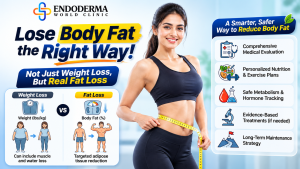
Losing weight and losing fat are not always the same thing.
A lower number on the weighing scale may look encouraging, but successful fat loss should ideally focus on reducing excess body fat while preserving muscle mass, supporting metabolic health, and creating habits that can be maintained long term.
At Endoderma World Clinic in Mohali, fat loss is approached as a medical and metabolic process rather than simply a matter of eating less.
If repeated diets, excessive workouts, or online weight-loss plans have not given you sustainable results, there may be more happening inside your body than calories alone can explain.
Weight Loss vs Fat Loss: What Is the Difference?
Your total body weight includes:
- Body fat
- Muscle
- Water
- Bones
- Organs and other tissues
When someone follows a highly restrictive diet, the weighing scale may fall quickly because of changes in water, glycogen and sometimes muscle mass.
Fat loss, on the other hand, focuses more specifically on reducing excess body fat while attempting to preserve lean muscle.
This distinction matters because muscle plays an important role in physical strength, metabolic health and long-term weight management.
That is why a proper fat-loss program should not depend only on the weighing scale.
Why Is Body Fat Difficult to Lose?
Many people assume that difficulty losing fat means they are not exercising enough or do not have enough willpower.
The reality can be much more complicated.
Several factors may affect fat gain and fat loss, including:
- Insulin resistance
- Thyroid disorders
- PCOS
- Type 2 diabetes
- Sleep quality
- Stress
- Eating patterns
- Physical activity
- Certain medications
- Hormonal abnormalities
- Loss of muscle mass
- Individual metabolic differences
For some people, simply reducing calories does not address the underlying reason they are gaining weight or struggling to lose fat.
This is where an endocrinology-led evaluation can be useful.
The Role of Hormones in Fat Loss
Hormones influence appetite, blood sugar regulation, energy expenditure, fat storage and several other metabolic processes.
Insulin Resistance
Insulin helps regulate blood glucose. When the body becomes resistant to insulin, higher insulin levels may be required to maintain normal blood glucose.
Insulin resistance is commonly associated with conditions such as obesity, prediabetes, Type 2 diabetes and PCOS.
Improving nutrition, physical activity, sleep and overall metabolic health can therefore be important components of a medically supervised fat-loss strategy.
Thyroid Function
Thyroid hormones influence metabolism and energy expenditure.
People with untreated hypothyroidism may experience symptoms such as fatigue, reduced energy and weight gain.
If thyroid disease is suspected, proper testing and medical treatment should come before relying on crash diets or supplements.
PCOS
PCOS can make weight and fat management particularly challenging for some women.
Insulin resistance is frequently associated with PCOS, which is why treatment may involve a combination of nutritional changes, physical activity, lifestyle management and medication when clinically indicated.
Why BMI Alone Does Not Tell the Whole Story
BMI can be useful as a screening measurement, but it does not directly show how much of your body consists of fat and how much consists of muscle.
Two people can have the same BMI but very different body compositions.
That is why a medical fat-loss assessment may also consider:
- Body-fat percentage
- Muscle mass
- Waist circumference
- Visceral fat
- Metabolic health
- Blood sugar levels
- Lipid profile
- Thyroid function
- Medical history
Visceral fat, which accumulates around internal organs, is particularly important because excessive visceral fat is associated with increased metabolic and cardiovascular risk.
The objective should therefore be better health and body composition—not simply becoming lighter on a weighing scale.
The Endoderma World Approach to Fat Loss
At Endoderma World Clinic, fat and weight management combines endocrinology with individualized metabolic evaluation.
Step 1: Medical and Metabolic Assessment
The first step is understanding why excess fat has accumulated.
Depending on the patient, evaluation may include:
- Medical history
- Weight history
- Lifestyle assessment
- Sleep and stress assessment
- Blood pressure
- Body-composition analysis
- HbA1c or blood-glucose testing
- Lipid profile
- Thyroid investigations
- Other hormonal or metabolic investigations when indicated
There is no single test or diet that is appropriate for everyone.
Step 2: Personalized Nutrition
Sustainable fat loss should not require living on an extremely low-calorie diet.
A more practical nutritional plan focuses on improving food quality, portion awareness and overall calorie balance while maintaining adequate protein and essential nutrients.
Depending on individual requirements, this may include:
- Adequate protein intake
- High-fibre foods
- Vegetables and whole foods
- Controlled portions
- Reduced intake of highly processed foods
- Better carbohydrate choices
- Healthy fats
- Regular meal patterns where appropriate
The aim is to create a plan that can realistically become part of everyday life.
Why Protein and Muscle Matter During Fat Loss
One of the biggest mistakes in aggressive dieting is focusing exclusively on the weighing scale.
If someone loses significant muscle along with fat, the final result may not be metabolically ideal.
Adequate protein combined with suitable resistance or strength-based activity can help support muscle preservation during a calorie deficit.
Maintaining muscle can also improve:
- Strength
- Mobility
- Physical function
- Body composition
- Long-term metabolic health
Exercise recommendations should always be adapted to a person’s age, fitness level and medical condition.
Can Medicines Help With Fat Loss?
For some patients with obesity or obesity-related medical conditions, doctors may consider prescription weight-management medications.
Modern obesity medicines, including certain GLP-1-based therapies, can be useful for appropriately selected patients.
However, these medications are not cosmetic shortcuts and are not suitable for everyone.
They require proper medical evaluation because treatment decisions can depend on:
- BMI
- Diabetes status
- Existing medical conditions
- Current medications
- Possible contraindications
- Side effects
- Treatment goals
Prescription weight-loss medicines should therefore be used only under qualified medical supervision.
Never start injections, tablets or so-called “fat burners” based solely on social-media recommendations.
Why Crash Diets Usually Cause Problems
Extreme diets may produce rapid changes on the weighing scale, but maintaining those results can be difficult.
Very restrictive dieting may also contribute to:
- Muscle loss
- Fatigue
- Nutritional deficiencies
- Hair fall
- Reduced exercise performance
- Increased hunger
- Difficulty maintaining the diet
- Weight regain after stopping the plan
A successful fat-loss program should be designed around months and years—not only the next two weeks.
Sleep and Stress Matter Too
Fat loss is not only about food.
Poor sleep can affect appetite, energy levels, food choices and the ability to exercise consistently.
Chronic stress may also make healthy routines harder to maintain.
A comprehensive program should therefore look at:
- Sleep duration
- Sleep quality
- Work schedule
- Stress levels
- Emotional eating
- Meal timing
- Daily movement
- Exercise habits
Small improvements across several areas can often be more sustainable than one extreme intervention.
Fat Loss With PCOS
Women with PCOS often search for ways to reduce stubborn abdominal fat.
Because PCOS may be associated with insulin resistance, treatment should focus on the underlying metabolic condition rather than following generic “PCOS belly” remedies from the internet.
A personalized approach may include:
- Nutrition
- Exercise
- Weight management
- Sleep improvement
- Metabolic evaluation
- Medication when medically indicated
Even modest, sustainable improvements in weight and metabolic health can be meaningful for many women with PCOS.
Fat Loss and Type 2 Diabetes
For people who are overweight and living with Type 2 diabetes, losing excess body fat can contribute to improved metabolic health and blood-glucose management.
The amount of weight loss required and the treatment strategy vary from person to person.
Patients taking diabetes medication should undergo weight-loss treatment under medical supervision because dietary changes, exercise and weight reduction may affect blood-glucose levels and medication requirements.
What Does Sustainable Fat Loss Look Like?
Sustainable fat loss is usually not dramatic.
It is consistent.
Instead of asking:
“How can I lose the maximum weight this month?”
A better question is:
“What changes can I continue long enough to improve my health permanently?”
Long-term fat management generally involves:
- Understanding your metabolic health.
- Creating an appropriate calorie deficit.
- Eating adequate protein and nutrients.
- Preserving muscle.
- Increasing physical activity.
- Improving sleep.
- Managing stress.
- Treating underlying medical conditions.
- Using medication only when medically appropriate.
- Monitoring progress and adjusting the plan over time.
When Should You See a Fat Loss or Weight Loss Doctor?
Consider seeking medical advice if:
- Your weight continues increasing despite lifestyle changes.
- You have repeatedly lost and regained weight.
- You have PCOS.
- You have diabetes or prediabetes.
- You suspect a thyroid problem.
- You have significant abdominal or visceral fat.
- You experience severe cravings or uncontrolled eating.
- You are considering prescription weight-loss medication.
- You want a medically supervised fat-loss plan.
A clinical evaluation can help distinguish between a lifestyle problem and an underlying metabolic or hormonal condition.
Doctor-Led Fat Loss in Mohali
At Endoderma World Clinic, patients receive an individualized approach to obesity, metabolic health and fat management.
The clinic combines endocrinology, metabolic assessment, nutrition and medical supervision to help identify factors that may be contributing to excessive body fat.
Instead of prescribing the same diet to every patient, treatment can be tailored according to body composition, medical history, laboratory findings and individual health goals.
Final Thoughts
Healthy fat loss is not about starving yourself, eliminating every carbohydrate or trying the latest social-media transformation challenge.
It is about understanding your body.
If your previous attempts have repeatedly failed, the solution may not be another restrictive diet. A medical evaluation can help identify metabolic, hormonal and lifestyle factors that need to be addressed.
With the right nutrition, activity, medical guidance and long-term strategy, fat loss can become a structured health journey rather than an endless cycle of dieting and weight regain.
Endoderma World Clinic
SCO 43, Sector 66A, JLPL, SAS Nagar, Mohali
Book a consultation to discuss a personalized, doctor-led fat-loss plan.
Frequently Asked Questions
Is fat loss different from weight loss?
Yes. Weight loss represents a reduction in total body weight, while fat loss focuses specifically on reducing body fat. A well-designed program also aims to preserve muscle wherever possible.
Can hormones stop me from losing fat?
Hormonal and metabolic conditions such as hypothyroidism, insulin resistance and PCOS can make weight management more difficult for some people. Proper diagnosis and treatment can help address these contributing factors.
What is the best diet for fat loss?
There is no single diet that works best for everyone. Sustainable fat loss generally requires an appropriate calorie deficit while maintaining adequate protein, fibre, micronutrients and a dietary pattern that the individual can realistically follow.
Can I take weight-loss injections for fat loss?
Prescription weight-management injections may be appropriate for some patients, but they require medical assessment and supervision. They should not be started without consulting a qualified doctor.
How quickly should I lose fat?
The appropriate rate depends on your starting weight, medical conditions, body composition and treatment plan. Sustainable progress is generally more important than rapid changes on the scale.
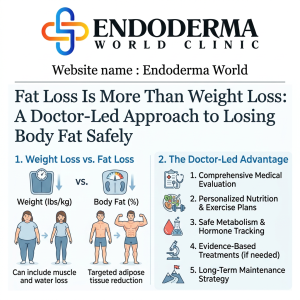
Endoderma World Clinic in Mohali provides endocrinology-led evaluation and medically supervised weight and fat-management services.
Leave a Reply